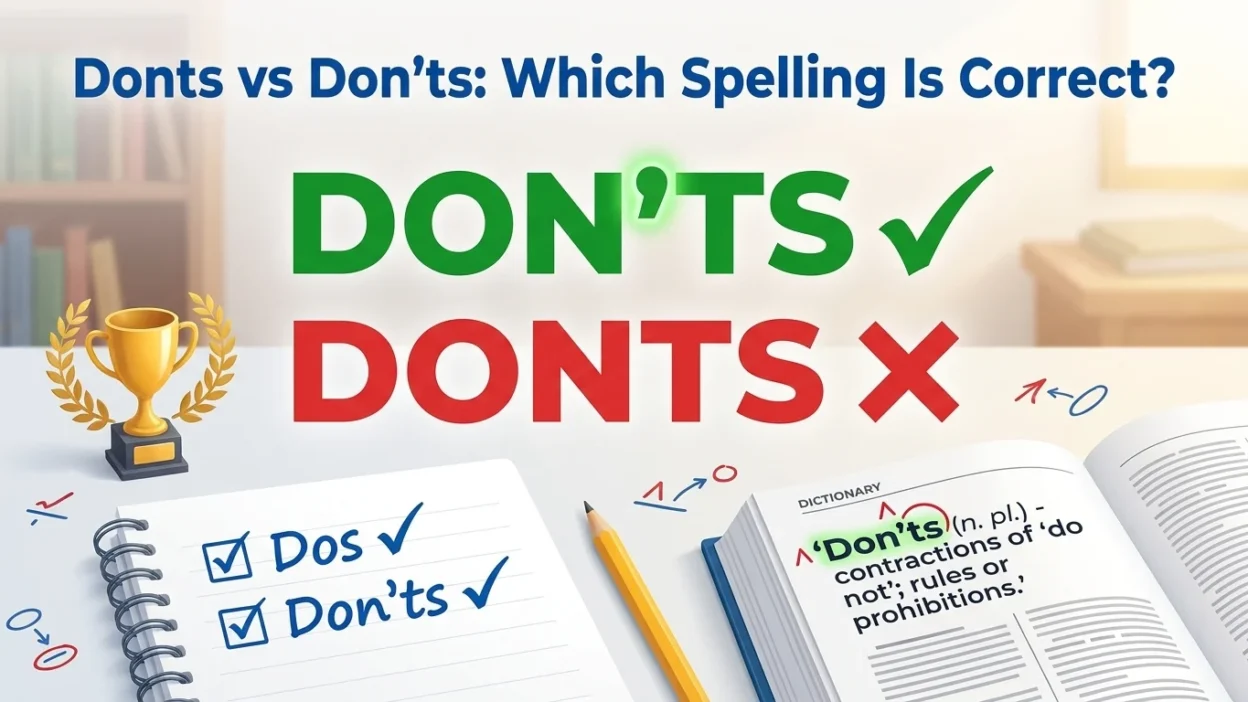
If you are wondering whether donts or don’ts is correct, don’ts is the standard spelling. The apostrophe shows that letters have been omitted from do not. The word don’ts is the plural form of don’t, and it is commonly used to describe things people should avoid doing. For example, “Learn the dos and don’ts before starting the project.”
The spelling can be confusing because don’ts contains an apostrophe inside a plural word. Normally, English plurals do not use apostrophes, but don’ts is a special case because the apostrophe belongs to the contraction don’t. In formal and everyday writing, don’ts is the clearest standard form. Donts without an apostrophe is sometimes seen informally, but it is generally not the preferred spelling.
Quick Answer
Don’ts is the standard spelling when you mean things that should not be done. The apostrophe comes from the contraction don’t, meaning do not. For example, “The guide explains the dos and don’ts of online safety.” Donts without an apostrophe is generally considered nonstandard in careful writing.
Why Do People Confuse It?
People often confuse donts and don’ts because the word is being made plural.
Usually, plurals do not need apostrophes:
- book → books
- car → cars
- lesson → lessons
Therefore, some writers assume:
- don’t → donts
However, don’t is already a contraction. The apostrophe shows that letters have been removed from do not.
When the contraction is made plural, the apostrophe remains:
don’t → don’ts
This gives us the common phrase:
dos and don’ts
The apostrophe is therefore meaningful rather than simply marking a plural.
First Word: Donts
Donts without an apostrophe is generally not the preferred spelling in standard English.
You may occasionally see it in informal writing, headlines, websites, or text where apostrophes are omitted. However, careful writers normally use don’ts.
For example:
Less preferred:
Here are five donts for new employees.
Preferred:
Here are five don’ts for new employees.
The apostrophe makes the connection to don’t clear.
Second Word: Don’ts
Don’ts is the standard plural form used when talking about things that people should not do.
For example:
The article lists the dos and don’ts of job interviews.
It can be used in many contexts:
- dos and don’ts
- travel dos and don’ts
- workplace dos and don’ts
- social media dos and don’ts
- writing dos and don’ts
- safety dos and don’ts
The singular form is don’t, while don’ts refers to multiple actions that should be avoided.
Donts vs Don’ts: Comparison Table
| Word | Standard? | Meaning | Example |
|---|---|---|---|
| don’ts | ✅ Yes | Things that should not be done | Learn the dos and don’ts. |
| donts | ⚠️ Nonstandard in careful writing | Intended to mean things that should not be done | Use don’ts instead. |
For standard writing, choose don’ts.
When to Use Each
When to Use “Don’ts”
Use don’ts when referring to multiple things that someone should avoid doing.
Examples:
Read the dos and don’ts before the interview.
The teacher explained the don’ts of academic writing.
These are the most important don’ts for safe internet use.
It is especially common in the phrase:
dos and don’ts
When to Use “Donts”
In careful standard English, avoid donts without the apostrophe.
If you are writing an essay, article, guide, report, presentation, or professional document, use don’ts instead.
10+ Examples of Don’ts
- Learn the dos and don’ts before traveling abroad.
- The guide explains the dos and don’ts of job interviews.
- These are the most important don’ts for new employees.
- The teacher discussed the dos and don’ts of classroom behavior.
- The website provides useful social media dos and don’ts.
- Read the safety dos and don’ts carefully.
- The article covers the dos and don’ts of writing an email.
- Parents often teach children the basic dos and don’ts of good manners.
- The trainer explained the don’ts of using the equipment.
- New students received a list of campus dos and don’ts.
- The manager shared several workplace dos and don’ts.
- The travel guide includes practical dos and don’ts for visitors.
Common Mistakes
Mistake 1: Removing the apostrophe
Incorrect or nonstandard in careful writing:
Learn the donts of social media.
Preferred:
Learn the don’ts of social media.
Mistake 2: Using an apostrophe incorrectly
The correct spelling is:
don’ts
Not:
dont’s
The apostrophe comes before the s because it belongs to the original contraction don’t.
Mistake 3: Forgetting the apostrophe in “don’t”
Remember that don’t is short for do not.
Therefore:
do not → don’t → don’ts
This explains why the apostrophe remains in the plural form.
Memory Trick
Use this simple trick:
Don’t + s = don’ts
Start with:
DON’T
Then add s:
DON’TS
The apostrophe stays in the same position.
You can also remember the common phrase:
dos and don’ts
Think of it as two matching categories:
Dos = things you should do
Don’ts = things you should not do
American vs British English
Don’ts is used in both American and British English.
The spelling is the same in both varieties:
dos and don’ts
There can be differences in punctuation style between individual style guides, particularly concerning apostrophe usage in unusual plural forms. However, don’ts is a widely recognized standard form.
The important point is that the apostrophe should normally remain when writing don’ts.
Similar Words
Several expressions can communicate a similar idea to don’ts.
Prohibitions
A prohibition is something that is officially forbidden.
The sign lists several prohibitions.
Restrictions
A restriction is a rule that limits what someone can do.
The website has age restrictions.
Warnings
A warning tells someone about a possible danger or problem.
The package contains several safety warnings.
Rules
A rule is an instruction about what is allowed or expected.
The school has strict rules.
Guidelines
Guidelines are recommended instructions for doing something properly.
The company published guidelines for employees.
These words are related to don’ts, but their meanings are not exactly identical.
Final Verdict
Don’ts is the standard spelling when you mean multiple things that should not be done.
Donts without an apostrophe is generally not preferred in careful standard English.
Remember:
DON’TS ✅
DONTS ⚠️ generally avoid in formal writing
The apostrophe comes from the contraction don’t, which means do not.
Frequently Asked Questions
Is it donts or don’ts?
Don’ts is the standard spelling. Use it when referring to multiple things that should not be done.
Why does don’ts have an apostrophe?
The apostrophe comes from the contraction don’t, which is short for do not. When don’t becomes plural, the apostrophe remains: don’ts.
Is donts a correct spelling?
Donts without an apostrophe is generally not the preferred spelling in careful standard English. Don’ts is the usual form.
Is it dos and don’ts or dos and donts?
The standard expression is dos and don’ts.
Is don’ts singular or plural?
Don’t is the singular contraction, while don’ts refers to multiple things that should not be done.
Should the apostrophe come before or after the s?
The correct spelling is don’ts, with the apostrophe before the s.
Is don’ts the same in American and British English?
Yes. Don’ts is used in both American and British English.
What does don’ts mean?
Don’ts means actions or behaviors that should be avoided or should not be done.
Remember This
Don’ts = correct standard spelling ✅
Donts = generally avoid ⚠️
Remember the simple pattern:
DON’T → DON’TS
And remember the familiar phrase:
Dos and don’ts
Dos tell you what to do, while don’ts tell you what not to do.
Conclusion
The difference between donts vs don’ts is mainly about the apostrophe. Don’ts is the standard form because it preserves the apostrophe from the contraction don’t, which means do not. It is commonly used to describe several actions or behaviors that should be avoided.
When writing an article, essay, guide, email, or professional document, choose don’ts rather than donts. The easiest way to remember the spelling is to start with don’t and simply add s: don’ts. This form works naturally in both American and British English.