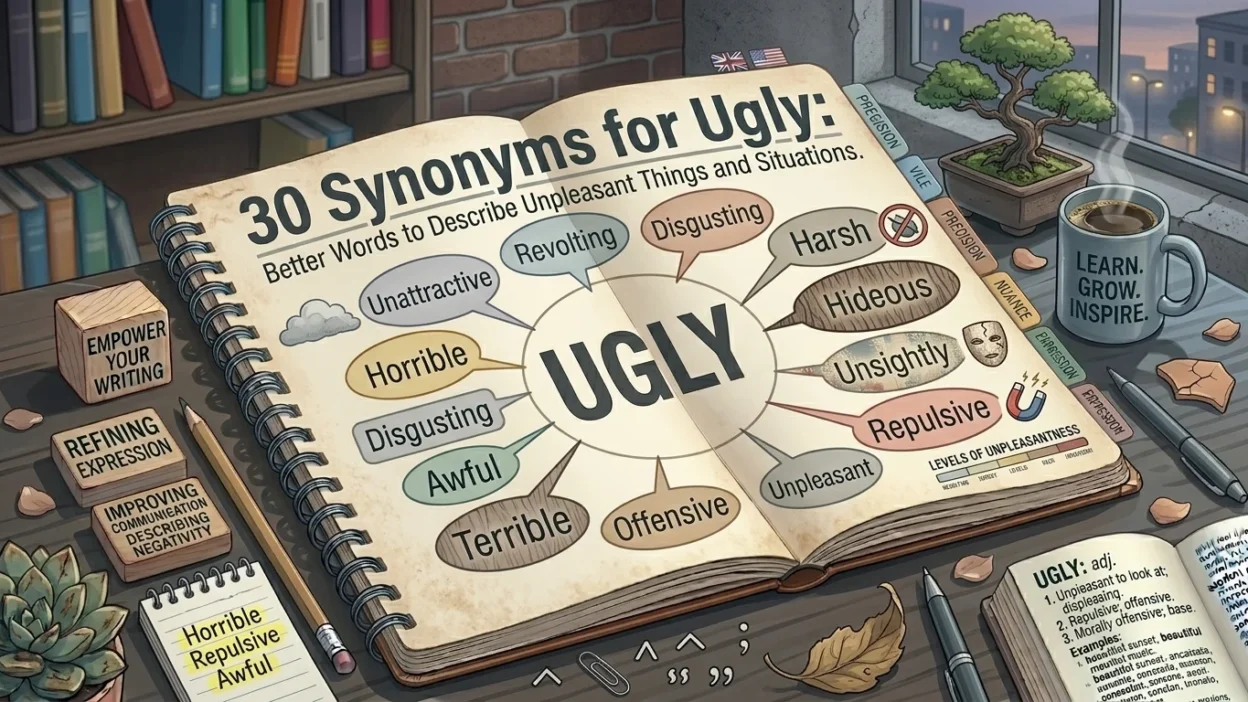
The word ugly is used to describe something that looks or feels unpleasant. This adjective explains the way something or someone appears, but it can also describe behavior and actions. Learning synonyms for ugly helps create a better negative description for different situations. For example, an ugly scene may happen when a little brother gets upset at a toy store because his wants are not fulfilled.
Different words related to ugly can describe physical appearance, emotions, and harmful behavior. Terms like unattractive, horrible, disgusting, and unpleasant looking show different levels of unpleasantness. Other negative words like bad, offensive, harsh, and terrible can describe actions, experiences, or feelings. By improving language usage, choosing the right word creates a clearer comparison and stronger expression.
Understanding grammar is important when using these words correctly. The forms uglier and ugliest show comparison. When ugly changes into these forms, the y becomes an i as part of the spelling change in adjective forms. Using the correct form helps make writing more natural and accurate.
What Does “Ugly” Mean?
The word ugly means something that is unpleasant to see, experience, or feel. It is often used for things that lack beauty, but it can also describe negative behavior, conflicts, or situations.
Examples:
- The building looks ugly.
- They had an ugly argument.
- The situation became ugly.
The meaning of ugly depends on the context. It can describe appearance, emotions, actions, or experiences.
30 Synonyms for Ugly
1. Unattractive
Meaning: Not pleasing or appealing in appearance.
Example Sentence: The old design looks unattractive.
Best Usage Context: Physical appearance and objects.
2. Horrible
Meaning: Extremely unpleasant or bad.
Example Sentence: It was a horrible experience.
Best Usage Context: Experiences and situations.
3. Disgusting
Meaning: Causing strong dislike or discomfort.
Example Sentence: The dirty room looked disgusting.
Best Usage Context: Appearance and unpleasant conditions.
4. Unpleasant
Meaning: Not enjoyable or comfortable.
Example Sentence: The weather was unpleasant today.
Best Usage Context: General negative situations.
5. Awful
Meaning: Very bad or unpleasant.
Example Sentence: The service was awful.
Best Usage Context: Experiences and opinions.
6. Terrible
Meaning: Extremely bad or harmful.
Example Sentence: They faced a terrible problem.
Best Usage Context: Problems and events.
7. Bad
Meaning: Not good or acceptable.
Example Sentence: He made a bad decision.
Best Usage Context: General negative descriptions.
8. Offensive
Meaning: Causing anger, dislike, or discomfort.
Example Sentence: His comments were offensive.
Best Usage Context: Words, behavior, and actions.
9. Harsh
Meaning: Unkind, severe, or unpleasant.
Example Sentence: She used harsh words.
Best Usage Context: Communication and behavior.
10. Repulsive
Meaning: Causing strong dislike.
Example Sentence: The smell was repulsive.
Best Usage Context: Strong negative reactions.
11. Hideous
Meaning: Extremely ugly or unpleasant.
Example Sentence: The old statue looked hideous.
Best Usage Context: Appearance and objects.
12. Horrid
Meaning: Very unpleasant or shocking.
Example Sentence: It was a horrid mistake.
Best Usage Context: Informal descriptions.
13. Disagreeable
Meaning: Not pleasant or enjoyable.
Example Sentence: He had a disagreeable attitude.
Best Usage Context: People and behavior.
14. Nasty
Meaning: Very unpleasant or mean.
Example Sentence: The argument became nasty.
Best Usage Context: Behavior and situations.
15. Unappealing
Meaning: Not attractive or interesting.
Example Sentence: The advertisement looked unappealing.
Best Usage Context: Designs and ideas.
16. Dreadful
Meaning: Extremely bad or unpleasant.
Example Sentence: The weather was dreadful.
Best Usage Context: Experiences and events.
17. Distasteful
Meaning: Causing dislike or discomfort.
Example Sentence: The joke was distasteful.
Best Usage Context: Behavior and opinions.
18. Repugnant
Meaning: Extremely unpleasant or offensive.
Example Sentence: The action was morally repugnant.
Best Usage Context: Formal writing.
19. Grotesque
Meaning: Strange and unpleasant in appearance.
Example Sentence: The painting had a grotesque style.
Best Usage Context: Art and appearance.
20. Unsightly
Meaning: Not attractive to look at.
Example Sentence: The damaged wall was unsightly.
Best Usage Context: Places and objects.
21. Foul
Meaning: Very unpleasant or offensive.
Example Sentence: The room had a foul smell.
Best Usage Context: Smells and behavior.
22. Revolting
Meaning: Causing strong dislike.
Example Sentence: The food looked revolting.
Best Usage Context: Appearance and reactions.
23. Abnormal
Meaning: Different from what is expected.
Example Sentence: The shape looked abnormal.
Best Usage Context: Objects and conditions.
24. Poor
Meaning: Low in quality.
Example Sentence: The product had poor quality.
Best Usage Context: Performance and results.
25. Defective
Meaning: Having a problem or fault.
Example Sentence: The machine was defective.
Best Usage Context: Products and objects.
26. Damaged
Meaning: Harmed or broken.
Example Sentence: The damaged building looked unsafe.
Best Usage Context: Physical conditions.
27. Messy
Meaning: Untidy or unpleasant-looking.
Example Sentence: His room was messy.
Best Usage Context: Places and appearance.
28. Rough
Meaning: Not smooth, pleasant, or easy.
Example Sentence: They had a rough experience.
Best Usage Context: Situations and experiences.
29. Negative
Meaning: Showing bad feelings or ideas.
Example Sentence: The discussion became negative.
Best Usage Context: Emotions and opinions.
30. Unfortunate
Meaning: Bad or unlucky.
Example Sentence: It was an unfortunate event.
Best Usage Context: Situations and events.
Comparison Table: When to Use Different Synonyms
| Synonym | Tone | Best Used For |
| Unattractive | Neutral | Appearance |
| Horrible | Strong | Experiences |
| Disgusting | Strong | Conditions |
| Offensive | Negative | Behavior |
| Harsh | Emotional | Words and actions |
| Unsightly | Formal | Objects and places |
| Grotesque | Creative | Strange appearances |
| Nasty | Casual | Arguments and behavior |
| Defective | Practical | Products |
| Unfortunate | Soft | Situations |
How to Choose the Right Synonym for Ugly
For Appearance
Use:
- Unattractive
- Unsightly
- Hideous
- Grotesque
These words focus on how something looks.
For Behavior and Actions
Use:
- Offensive
- Harsh
- Nasty
- Distasteful
These describe negative actions or attitudes.
For Situations and Experiences
Use:
- Horrible
- Terrible
- Awful
- Unfortunate
These describe difficult moments or events.
For Strong Negative Feelings
Use:
- Disgusting
- Repulsive
- Revolting
- Repugnant
These show stronger emotional reactions.
Common Mistakes When Using Synonyms for Ugly
Not every synonym has the same strength. Words like “hideous” or “repulsive” are much stronger than “unattractive.” Choosing a word that matches the situation helps your writing sound natural.
For example:
“The design is unattractive” sounds neutral.
“The design is hideous” sounds extremely negative.
Why Learn Synonyms for Ugly?
Learning different alternatives helps you:
- Improve vocabulary
- Avoid repetition
- Describe situations accurately
- Express emotions better
- Make writing more engaging
A strong vocabulary allows you to choose the right word instead of using “ugly” in every situation.
Conclusion
Learning synonyms for ugly helps you describe negative appearances, behaviors, and situations with more accuracy. Words like unattractive, horrible, disgusting, harsh, and unsightly provide different levels of meaning.
For students, ESL learners, writers, and content creators, understanding these differences improves communication and creates more effective writing.