
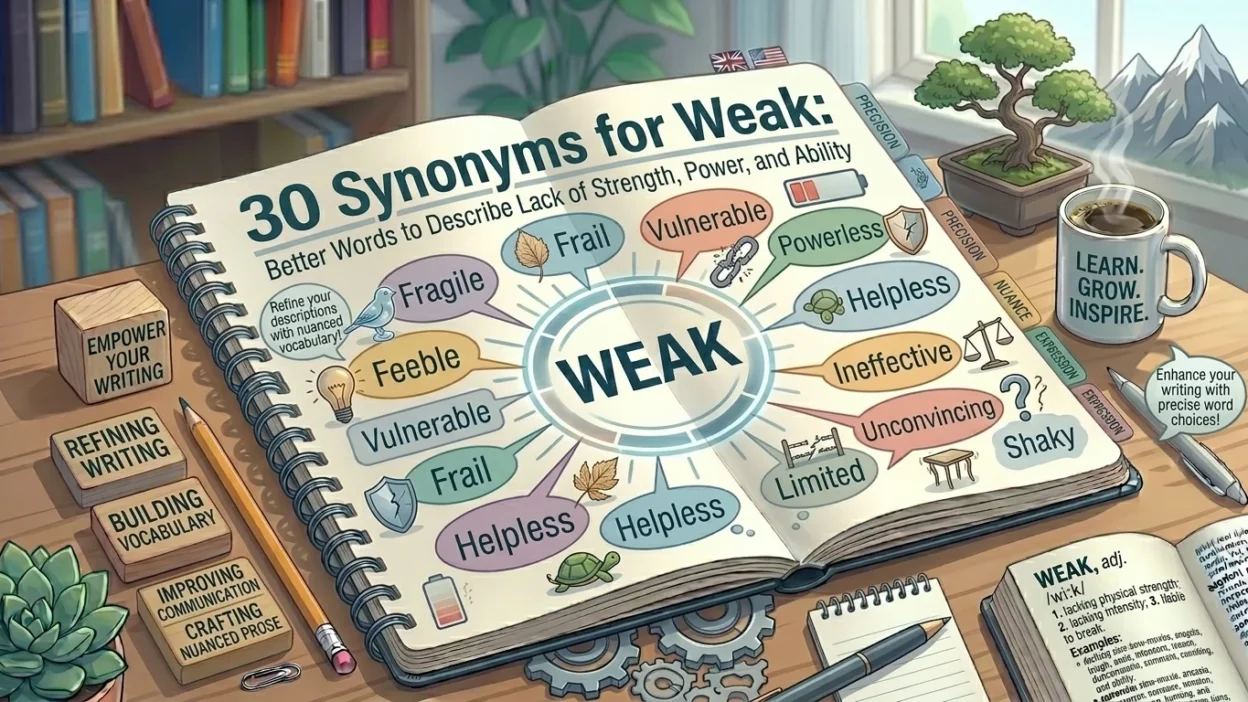
The term synonyms for weak explains how the word weak is used when something is the opposite of being strong. Through my experience with language and writing, I have noticed that this word can describe different situations, from muscles that lack physical ability to arguments and defenses that fail to show enough strength or power. When something is lacking energy, support, or quality, people often connect it with weakness. A person with less will power may give up, but strong determination helps people continue through difficult situations.
Weakness can also appear in everyday things like coffee, food, and drinks that have less flavor or impact. A flimsy argument is often considered weak because it does not provide enough support. A person should recognize that simple choices can show strength or weakness. A really boring or ignorant TV show may be called weak when it fails to entertain or impress. Just as you cannot lift heavy objects without strong muscles, your ideas and actions need support to become powerful.
The word weak is commonly used in English to describe a lack of physical strength, power, confidence, or effectiveness. It can describe a person, an idea, an argument, a system, or even a feeling.
While “weak” is simple and easy to understand, using different synonyms for weak can make your writing more accurate and expressive. Some words describe physical weakness, while others explain poor performance, low confidence, or limited ability.
In this guide, you will learn the meaning of “weak,” explore 30 useful alternatives, understand their differences, and learn how to choose the right word for different situations.
What Does “Weak” Mean?
The word weak means having little strength, power, energy, or influence. It can refer to physical condition, emotions, skills, or the quality of something.
Examples:
- He felt weak after being sick.
- The argument was weak and unclear.
- The signal is weak today.
Choosing the right synonym can help you describe the exact type of weakness you mean.
30 Synonyms for Weak
1. Fragile
Meaning: Easily broken or damaged.
Example Sentence: The fragile glass needs careful handling.
Best Usage Context: Objects and situations.
2. Feeble
Meaning: Lacking strength or energy.
Example Sentence: The old man had a feeble voice.
Best Usage Context: Physical weakness.
3. Frail
Meaning: Physically weak and delicate.
Example Sentence: The frail patient needed support.
Best Usage Context: Health and physical condition.
4. Powerless
Meaning: Without power or control.
Example Sentence: They felt powerless to change the situation.
Best Usage Context: Influence and control.
5. Helpless
Meaning: Unable to take action or solve a problem.
Example Sentence: The child felt helpless during the storm.
Best Usage Context: Difficult situations.
6. Vulnerable
Meaning: Easily harmed or affected.
Example Sentence: Small businesses can be vulnerable during crises.
Best Usage Context: Risk and protection.
7. Delicate
Meaning: Easily damaged or affected.
Example Sentence: The delicate plant needs extra care.
Best Usage Context: Objects and situations.
8. Ineffective
Meaning: Not producing good results.
Example Sentence: The old method was ineffective.
Best Usage Context: Plans and strategies.
9. Poor
Meaning: Low in quality or ability.
Example Sentence: The team gave a poor performance.
Best Usage Context: Results and quality.
10. Inadequate
Meaning: Not enough or not suitable.
Example Sentence: The resources were inadequate for the project.
Best Usage Context: Formal writing.
11. Unstable
Meaning: Not strong, secure, or reliable.
Example Sentence: The structure became unstable.
Best Usage Context: Systems and situations.
12. Powerless
Meaning: Having no strength or authority.
Example Sentence: He felt powerless against the problem.
Best Usage Context: Control and influence.
13. Soft
Meaning: Lacking firmness or strength.
Example Sentence: The material is too soft for construction.
Best Usage Context: Physical qualities.
14. Mild
Meaning: Not strong or intense.
Example Sentence: She had mild symptoms.
Best Usage Context: Feelings and effects.
15. Limited
Meaning: Small in ability, amount, or range.
Example Sentence: He has limited experience.
Best Usage Context: Skills and resources.
16. Inefficient
Meaning: Not working effectively.
Example Sentence: The system is inefficient and slow.
Best Usage Context: Work and processes.
17. Unconvincing
Meaning: Not strong enough to persuade.
Example Sentence: His explanation was unconvincing.
Best Usage Context: Arguments and opinions.
18. Uncertain
Meaning: Not strong or confident.
Example Sentence: She gave an uncertain answer.
Best Usage Context: Decisions and confidence.
19. Shaky
Meaning: Weak, unstable, or unreliable.
Example Sentence: The company has a shaky financial position.
Best Usage Context: Informal descriptions.
20. Deficient
Meaning: Missing something important.
Example Sentence: The report was deficient in detail.
Best Usage Context: Formal writing.
21. Infirm
Meaning: Weak, especially because of age or illness.
Example Sentence: The infirm man needed assistance.
Best Usage Context: Physical condition.
22. Powerless
Meaning: Unable to influence events.
Example Sentence: The group felt powerless during the conflict.
Best Usage Context: Situations involving control.
23. Insufficient
Meaning: Not enough in amount or quality.
Example Sentence: The evidence was insufficient.
Best Usage Context: Academic and professional writing.
24. Vulnerable
Meaning: Open to harm or attack.
Example Sentence: The system is vulnerable to problems.
Best Usage Context: Security and risk.
25. Weak-willed
Meaning: Lacking determination.
Example Sentence: He appeared weak-willed under pressure.
Best Usage Context: Personality.
26. Spineless
Meaning: Lacking courage or confidence.
Example Sentence: The leader was criticized as spineless.
Best Usage Context: Strong criticism.
27. Limp
Meaning: Lacking strength or energy.
Example Sentence: The plant looked limp without water.
Best Usage Context: Physical appearance.
28. Exhausted
Meaning: Extremely tired and lacking energy.
Example Sentence: She felt exhausted after the journey.
Best Usage Context: Energy and effort.
29. Power-deficient
Meaning: Lacking enough strength or ability.
Example Sentence: The device is power-deficient.
Best Usage Context: Technology and systems.
30. Ineffectual
Meaning: Weak and unable to create results.
Example Sentence: The response was ineffectual.
Best Usage Context: Formal criticism.
Comparison Table: When to Use Different Synonyms for Weak
| Synonym | Tone | Best Used For |
| Fragile | Neutral | Objects and situations |
| Feeble | Strong | Physical weakness |
| Vulnerable | Neutral | Risk and protection |
| Powerless | Emotional | Lack of control |
| Ineffective | Professional | Methods and results |
| Inadequate | Formal | Lack of ability |
| Limited | Neutral | Skills and resources |
| Shaky | Casual | Unstable situations |
| Unconvincing | Formal | Arguments |
| Frail | Descriptive | Physical condition |
How to Choose the Right Synonym for Weak
For Physical Weakness
Use:
- Frail
- Feeble
- Limp
- Exhausted
These describe body strength and energy.
For Lack of Ability
Use:
- Ineffective
- Inadequate
- Limited
- Inefficient
These describe performance and skills.
For Lack of Confidence
Use:
- Uncertain
- Weak-willed
- Spineless
These describe personality and attitude.
For Risk or Damage Use:
- Fragile
- Vulnerable
- Delicate
- Unstable
These describe things that can easily fail.
Common Mistakes When Using Synonyms for Weak
Using Physical Words for Ideas
Example:
“The plan is frail.”
Better:
“The plan is ineffective.”
Using Harsh Words Incorrectly
Example:
“He is spineless.”
This is a strong criticism and should be used carefully.
Ignoring Context
A weak person, weak argument, and weak material require different synonyms.
Why Learn Synonyms for Weak?Learning alternatives helps you:
- Improve vocabulary
- Avoid repetition
- Write with more accuracy
- Describe problems clearly
- Improve communication skills
A wider vocabulary helps you express different levels and types of weakness.
Conclusion
Learning synonyms for weak helps you describe lack of strength, ability, confidence, or effectiveness more clearly. Words like fragile, vulnerable, ineffective, limited, frail, and powerless allow you to express different meanings.
The best synonym depends on the situation and the message you want to communicate. By practicing these words, students, ESL learners, writers, and content creators can improve their English vocabulary and create stronger writing.