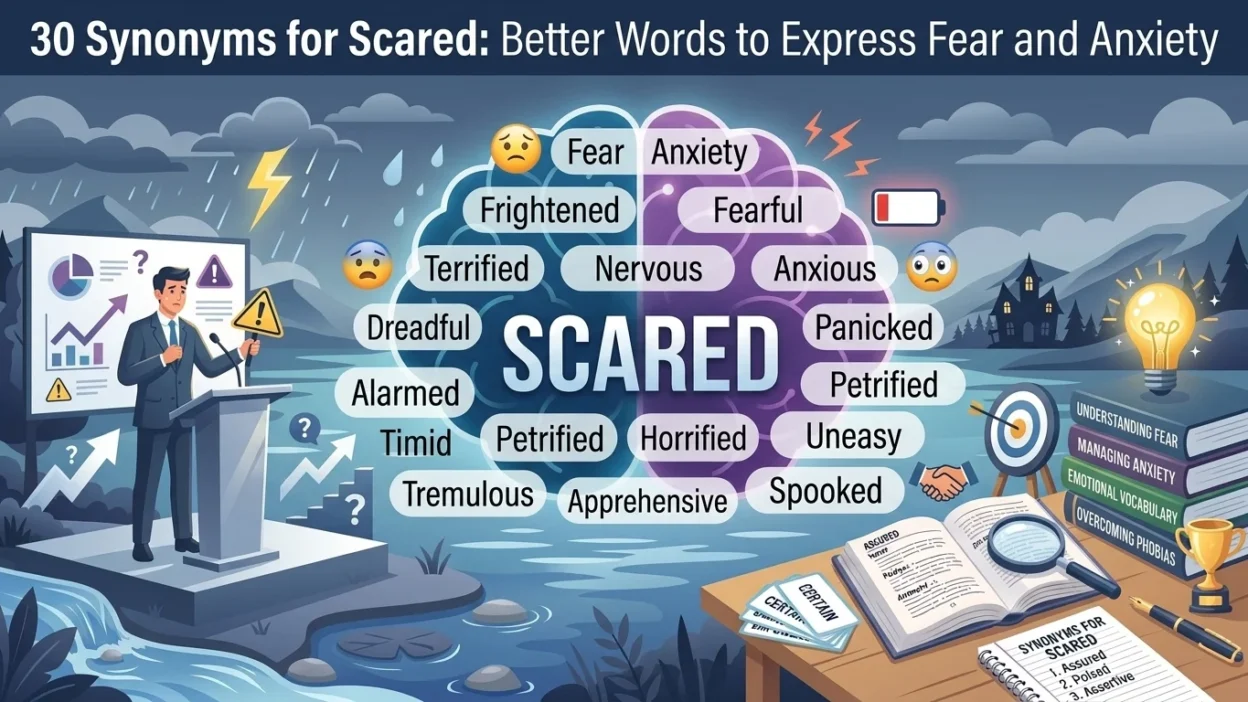
The word scared is commonly used to describe the feeling of fear or worry. People can feel scared because of danger, uncertainty, loud noises, difficult situations, or even watching a scary movie. Depending on the context, scared can describe anything from slight nervousness to intense fear.
Learning synonyms for scared helps students, ESL learners, writers, and content creators express different levels of fear more naturally. Instead of repeating the word scared, you can choose alternatives that better fit the situation and emotion.
In this guide, you will learn the meaning of scared, explore 30 useful synonyms, and understand when each word works best.
What Does “Scared” Mean?
Meaning and Usage
The word scared means feeling frightened, worried, or nervous because of a real or imagined danger. It can describe emotional reactions to many different situations.
Examples:
- She was scared during the thunderstorm.
- The child looked scared in the dark.
- I was scared before giving my speech.
The meaning changes slightly depending on the context. It can describe fear, anxiety, nervousness, or panic.
30 Synonyms for Scared
1. Afraid
Meaning: Feeling fear or worry.
Example Sentence: She was afraid of the storm.
Best Usage Context: Everyday conversations.
2. Frightened
Meaning: Feeling sudden fear.
Example Sentence: The loud noise frightened everyone.
Best Usage Context: Unexpected events.
3. Terrified
Meaning: Extremely scared.
Example Sentence: He was terrified during the earthquake.
Best Usage Context: Intense fear.
4. Fearful
Meaning: Full of fear.
Example Sentence: The child gave a fearful look.
Best Usage Context: Formal writing.
5. Nervous
Meaning: Feeling worried or anxious.
Example Sentence: I was nervous before the interview.
Best Usage Context: Everyday situations.
6. Anxious
Meaning: Feeling uneasy or concerned.
Example Sentence: She felt anxious about the exam.
Best Usage Context: Emotional discussions.
7. Alarmed
Meaning: Suddenly worried by danger.
Example Sentence: Everyone became alarmed by the smoke.
Best Usage Context: Emergencies.
8. Panicked
Meaning: Filled with sudden fear.
Example Sentence: The crowd panicked during the fire alarm.
Best Usage Context: Dangerous situations.
9. Startled
Meaning: Surprised by something unexpected.
Example Sentence: I was startled by the loud knock.
Best Usage Context: Sudden events.
10. Shocked
Meaning: Deeply surprised or frightened.
Example Sentence: We were shocked by the news.
Best Usage Context: Unexpected information.
11. Timid
Meaning: Naturally shy or fearful.
Example Sentence: The timid puppy hid behind its owner.
Best Usage Context: Personality descriptions.
12. Hesitant
Meaning: Unsure because of fear.
Example Sentence: She was hesitant to speak.
Best Usage Context: Decision-making.
13. Apprehensive
Meaning: Worried about something that may happen.
Example Sentence: He felt apprehensive before surgery.
Best Usage Context: Formal writing.
14. Uneasy
Meaning: Slightly worried.
Example Sentence: I felt uneasy walking alone.
Best Usage Context: Mild fear.
15. Worried
Meaning: Concerned about a problem.
Example Sentence: They were worried about their friend.
Best Usage Context: Daily conversations.
16. Disturbed
Meaning: Emotionally troubled.
Example Sentence: She felt disturbed after the accident.
Best Usage Context: Emotional experiences.
17. Troubled
Meaning: Feeling emotional concern.
Example Sentence: He looked troubled.
Best Usage Context: Personal emotions.
18. Intimidated
Meaning: Feeling afraid because of someone or something powerful.
Example Sentence: New employees often feel intimidated.
Best Usage Context: Social situations.
19. Cowed
Meaning: Made fearful by threats.
Example Sentence: The witness felt cowed.
Best Usage Context: Formal English.
20. Petrified
Meaning: Extremely frightened.
Example Sentence: She was petrified of spiders.
Best Usage Context: Strong fear.
21. Horrified
Meaning: Filled with horror.
Example Sentence: Everyone was horrified by the accident.
Best Usage Context: Serious events.
22. Spooked
Meaning: Easily frightened.
Example Sentence: The horse was spooked by the noise.
Best Usage Context: Informal English.
23. Jittery
Meaning: Nervous and unable to relax.
Example Sentence: He felt jittery before the competition.
Best Usage Context: Anxiety.
24. Shaky
Meaning: Physically trembling from fear.
Example Sentence: She felt shaky after the experience.
Best Usage Context: Physical reactions.
25. Timorous
Meaning: Easily frightened.
Example Sentence: The timorous child avoided strangers.
Best Usage Context: Formal writing.
26. Fainthearted
Meaning: Lacking courage.
Example Sentence: The fainthearted runner quit early.
Best Usage Context: Literature.
27. Overwhelmed
Meaning: Emotionally overcome.
Example Sentence: She felt overwhelmed by the situation.
Best Usage Context: Stressful moments.
28. Insecure
Meaning: Lacking confidence because of fear.
Example Sentence: He felt insecure about speaking publicly.
Best Usage Context: Personal development.
29. Tense
Meaning: Unable to relax because of worry.
Example Sentence: The room became tense.
Best Usage Context: Suspenseful situations.
30. Fear-Stricken
Meaning: Filled with extreme fear.
Example Sentence: The villagers were fear-stricken during the storm.
Best Usage Context: Dramatic writing.
Comparison Guide
When to Use Different Synonyms for Scared
| Synonym | Meaning Focus | Best Use |
|---|---|---|
| Afraid | General fear | Everyday English |
| Frightened | Sudden fear | Unexpected situations |
| Terrified | Extreme fear | Dangerous events |
| Nervous | Mild worry | Daily life |
| Anxious | Ongoing concern | Emotional situations |
| Petrified | Intense fear | Dramatic descriptions |
| Alarmed | Immediate concern | Emergencies |
| Apprehensive | Fear of the future | Formal writing |
How to Choose the Right Synonym
For Mild Fear
Use:
- Nervous
- Uneasy
- Worried
- Hesitant
- Anxious
These describe light to moderate fear.
For Strong Fear
Use:
- Terrified
- Petrified
- Horrified
- Panicked
- Fear-Stricken
These express intense emotional reactions.
For Formal Writing
Use:
- Apprehensive
- Fearful
- Timorous
- Cowed
- Fainthearted
These work well in academic or literary writing.
For Everyday Conversations
Use:
- Afraid
- Nervous
- Startled
- Spooked
- Shaky
These are common and easy to understand.
Why Learning Synonyms for Scared Matters
Using different words instead of repeating scared makes your writing more expressive and accurate. Each synonym reflects a different level of fear, anxiety, or emotional response.
For students, ESL learners, writers, and content creators, expanding your vocabulary improves communication and helps create stronger, more engaging writing.
Conclusion
Learning synonyms for scared helps you describe fear, worry, and anxiety with greater precision. Whether you choose afraid, terrified, anxious, or petrified, selecting the right synonym makes your writing clearer and more vivid.
Building a richer vocabulary improves both spoken and written English, allowing you to express emotions naturally in every situation.